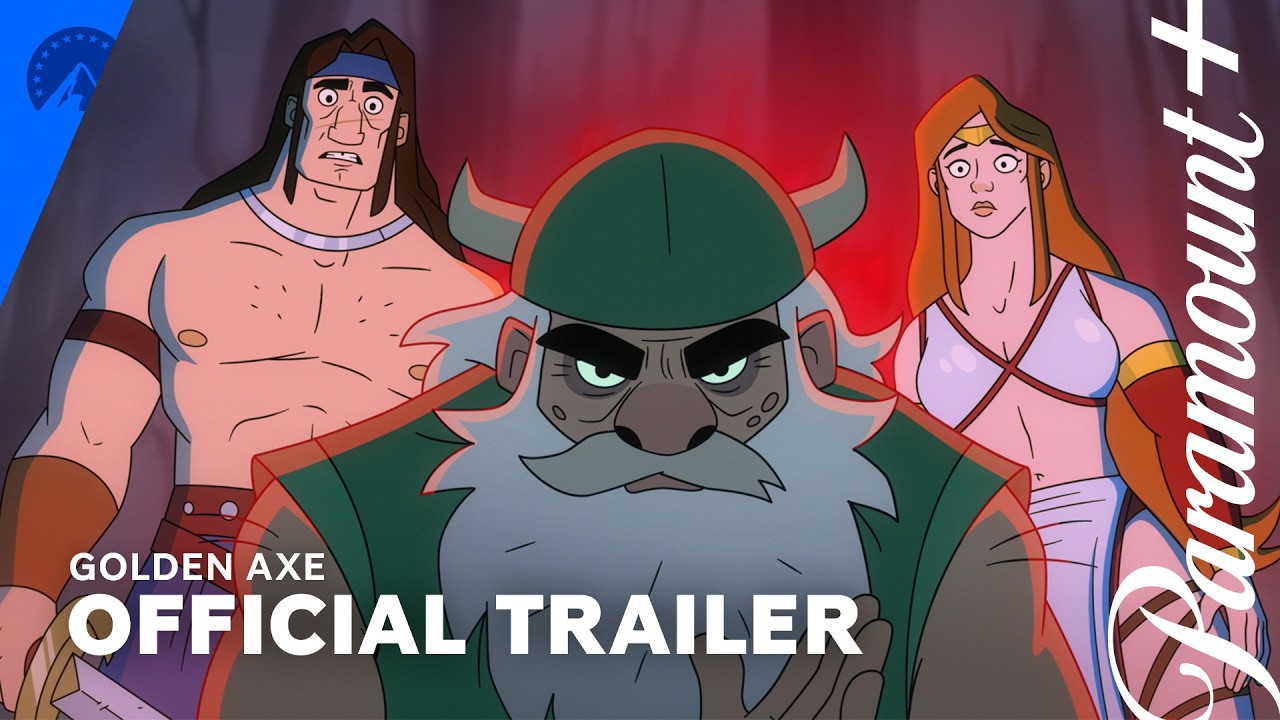
All ten episodes of Golden Axe land on Paramount+ on September 16, and a first trailer is out. Paramount announced the date on August 20, alongside a full voice cast and a production credit list that is more interesting than most game adaptations manage.
The show reunites Ax Battler, Tyris Flare and Gilius Thunderhead to save Yuria from Death Adder, a villain the announcement pointedly describes as unable to stay dead. The joke is the premise: this is a story about people who have done this before.
The creative pedigree is animated comedy, not fantasy epic
Mike McMahan and Joe Chandler co-created the series, co-wrote the first episode and executive produce, with Chandler running the show. McMahan created Star Trek: Lower Decks and Solar Opposites, both of which take a beloved property seriously enough to be funny about it rather than at it.
Titmouse animates, with Chris Prynoski, Shannon Prynoski, Antonio Canobbio and Ben Kalina executive producing. That studio's house style — loose, fast, willing to be ugly for a joke — is visible in the trailer, and it is a deliberate distance from the polished CG most game adaptations reach for.
The new character is the one carrying the show
Danny Pudi voices Hampton Squib, an inexperienced adventurer who is not in the 1989 game and whose ambitions outrun his ability. He is the audience surrogate, and the structure Paramount describes is the three veterans being forced to work with him.
- Matthew Rhys as Gilius Thunderhead, described as a grumpy battle dwarf with poor hygiene.
- Liam McIntyre as Ax Battler, a barbarian with a strict code of honour.
- Lisa Gilroy as Tyris Flare, a battle sorceress with a sharp wit.
- Carl Tart as Chronos Evil Lait, a humanoid panther.
Sega has its executives inside the production
Sega's Haruki Satomi, Shuji Utsumi and Toru Nakahara are credited as executive producers, alongside Neal H. Moritz, Pavun Shetty and Toby Ascher of Original Film — the team behind the Sonic the Hedgehog films. Golden Axe is produced by CBS Studios' Eye Animation Productions with Sony Pictures Television.
That is Sega running the same play that worked for Sonic: keep senior rights-holders on the credits, hire people who like the source material, and let the tone be lighter than the original marketing was. Golden Axe has less to protect than Sonic did, which is arguably an advantage.
The release model is the part worth noticing
All ten episodes at once, on a service that has spent two years pushing weekly drops for its prestige drama. For a half-hour comedy built on running gags, a binge release is the right call and an unusual one. It also removes any week-to-week conversation, which is a trade Paramount has evidently decided is worth making.