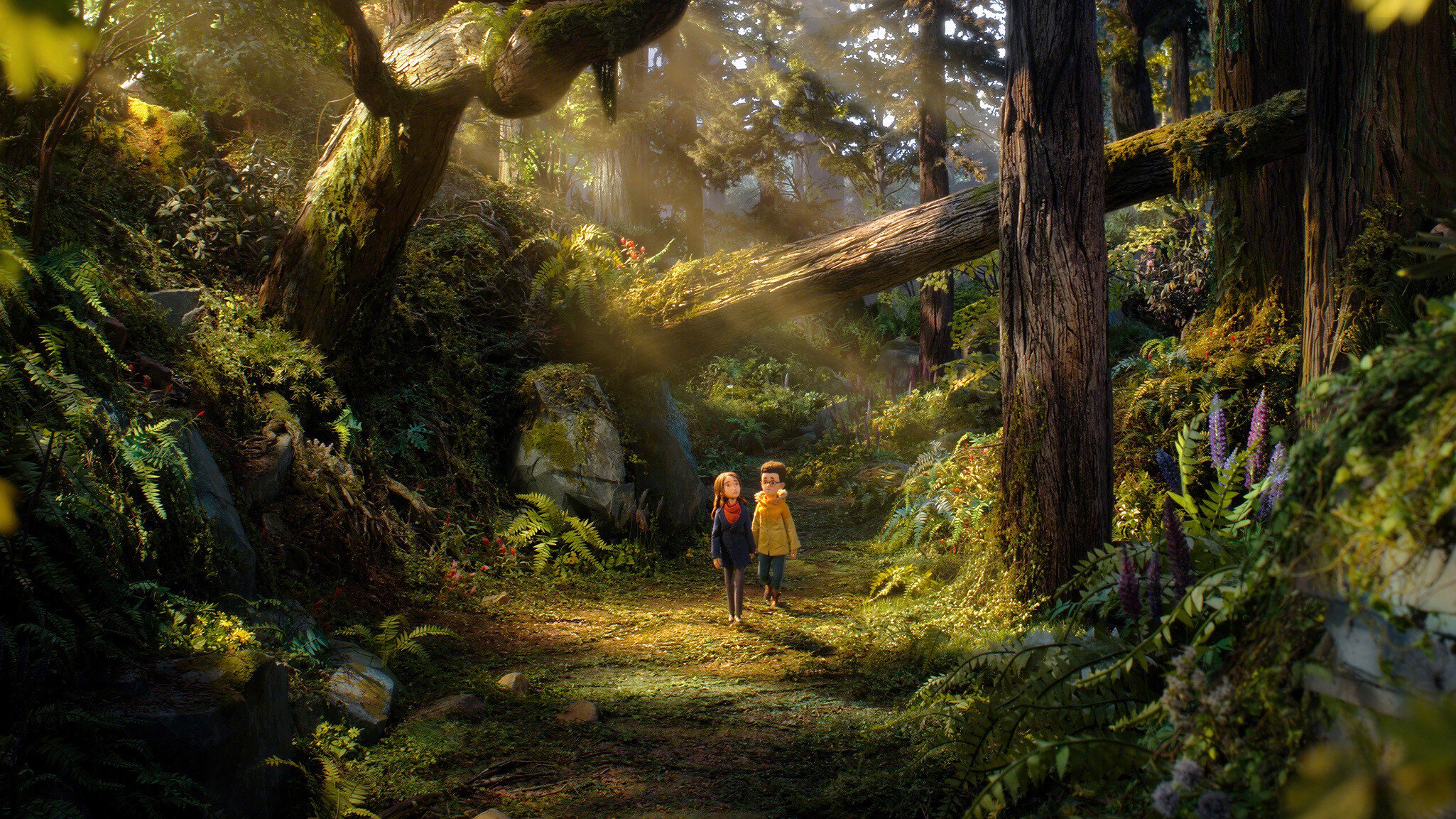
Wildwood is now playing in U.S. theaters, turning LAIKA's 16-year adaptation into a live test of whether stop-motion can carry the scale, darkness and narrative load of a 132-minute epic fantasy. The studio built 136 sets and 231 practical puppets for the film, including a golden eagle puppet that took about 3,000 hours to make. With the October 23 release underway, those production figures can finally be measured against a broad critical response and the first reported ticket-sales signal.
Rotten Tomatoes showed a 100% Tomatometer from 87 reviews and a 98% Popcornmeter from 250-plus verified ratings when checked on October 23. The critic number means every counted review was classified as positive, not that every critic awarded a perfect score or agreed on the story. Deadline also reported that Thursday previews were around 1 million dollars, citing distribution sources. That is an early estimate rather than a final preview gross or an opening-weekend result, but it is the first published performance figure for the release.
A 16-year adaptation now has a finished 132-minute cut
Director Travis Knight acquired the screen rights before Colin Meloy's illustrated novel was published in 2011. At the London world premiere, Meloy said LAIKA had optioned the book while he was still working on it in 2010. The result is the studio's sixth stop-motion feature and its first since Missing Link in 2019, directed and produced by Knight from a screenplay by Chris Butler.
Current AP reporting and the BFI festival listing both give the runtime as 132 minutes, replacing the 139-minute figure carried by older listings and the September NexusGG draft. Some classification and cinema records still differ by a minute or retain the earlier number, including HOT CINEMA's new Israeli listing, but 132 minutes remains the best-supported public length for the finished film. The conflict matters because Wildwood is not a compact family matinee but a long-form fantasy built to let its factions, landscapes and grief-driven conflict breathe.
Two children anchor a cast built for a larger conflict
The story begins in Portland when crows abduct Prue McKeel's baby brother, Mac, and carry him into the Impassable Wilderness. Prue, voiced by Peyton Elizabeth Lee, follows with her classmate Curtis Mehlberg, voiced by Jacob Tremblay. The rescue draws them into a hidden society of talking animals, bandits and rival powers whose struggle threatens the forest itself. The setup comes from Meloy's novel, illustrated by Carson Ellis, but LAIKA's version has to turn that literary geography into spaces that can be lit, moved through and photographed one frame at a time.
LAIKA and Fathom's current cast list adds Carey Mulligan, Mahershala Ali, Angela Bassett, Awkwafina, Jake Johnson, Charlie Day, Amandla Stenberg, Jemaine Clement, Maya Erskine, Tantoo Cardinal, Tom Waits and Richard E. Grant around Lee and Tremblay. The ensemble is large, but the official synopsis keeps the emotional line on Prue's attempt to bring Mac home and on the choices she and Curtis make after the rescue mission becomes a political conflict.
231 puppets turn scale into a production constraint
The 136 sets and 231 practical puppets explain why the adaptation required more than a larger shooting stage. Every crowd, landscape and creature creates another set of physical decisions: how a puppet supports its weight, how fabric behaves under lights, how a miniature environment allows an animator to reach the character, and how separate elements can be combined without losing the tactile character of the image. LAIKA uses modern digital tools alongside its physical work, but the photographed object remains the foundation of the performance.
The General, a golden eagle voiced by Angela Bassett, is the clearest measure of that constraint. AP reports that the puppet took roughly 3,000 hours to build. The number does not describe animation time or guarantee a memorable character; it shows how much engineering can be hidden inside a single figure before an animator moves it for the camera. Multiplying that problem across hundreds of puppets and more than a hundred sets is what separates Wildwood's scale from a claim based only on wide shots.
Knight has framed the production as a rejection of speed for its own sake. At the October 21 AFI FEST U.S. premiere, he made that argument more explicit: Variety reported that Knight sees technology as useful when artists control it, but rejects generative AI as a replacement for them because it cannot supply lived human feeling. His point fits the production method rather than serving as a separate slogan—LAIKA uses digital tools, including three-dimensional printing, while preserving the physical performance and accumulated choices of its artists.
The PG-13 rating changes the family-film calculation
The Motion Picture Association rated Wildwood PG-13 for strong fantasy violence and bloody images, thematic material, suicide-related material, brief partial nudity and language. That is a more specific warning than a general description of the film as dark. It tells families that the 132-minute commitment includes material that may require context for younger children, especially around violence, bereavement and suicide-related themes.
The rating also connects the production's size to its emotional purpose. Knight told AP that the film moves through grief and that his own family losses informed his relationship to the material. That does not establish how every scene handles those themes, and this article is not a NexusGG review of the finished film. It does explain why Wildwood's length and darker classification are not incidental marketing details: LAIKA is using the larger canvas for a story about loss, power and sacrifice rather than only a sequence of elaborate environments.
A 100% Tomatometer still leaves room for disagreement
The expanded review pool reinforces the strongest conclusion from the London premiere: critics broadly regard the stop-motion craft as the film's decisive achievement. TheWrap's William Bibbiani ties the film's impact to the difficulty and precision of its handmade process, while The Guardian's Peter Bradshaw praises its physical immediacy. Rotten Tomatoes' 100% from 87 reviews measures that positive direction of travel; it does not erase differences in enthusiasm, ratings or reasoning.
Two reviews published since October 14 show the range. The Boston Globe's Odie Henderson awarded 3.5 out of 4 stars, arguing that the large images are backed by a strong screenplay and voice cast while warning that the PG-13 violence and mature themes are meaningful. AP's Mark Kennedy gave 2.5 out of 4 stars, praising the technical achievement but finding the story conventional, exhausting and less convincing in its treatment of grief, growth and environmentalism.
The consensus is therefore strong without being uniform: LAIKA appears to have solved the problem of making a stop-motion world feel genuinely expansive, but critics differ on whether the rescue structure, political factions and grief narrative give that world enough dramatic momentum across 132 minutes. The release-day score is a useful snapshot, not a substitute for the specific reviews or a permanent verdict; both the percentage and review count can change.
The release is live across several territories, not on one universal timetable
Fathom Entertainment is distributing Wildwood theatrically across the United States, where the nationwide release opened on October 23. Select U.S. presentations are available in Dolby Cinema, 4DX and DBOX where offered. The theatrical rollout follows the October 21 opening-night U.S. premiere at AFI FEST, which took place at the TCL Chinese Theatre in Hollywood.
First-party and official listings confirm October 23 openings in Canada, the United Kingdom and Ireland as well. Australia and New Zealand opened on October 22. FilmNation Entertainment handles international sales rather than operating as one worldwide theatrical distributor, so those dates are confirmed territory examples—not proof of one global schedule. Local distributors, classifications, formats and ticket availability still differ.
For Israel, HOT CINEMA now lists Wildwood under the Hebrew title יער פרא for November 12, 2026, in English with Hebrew subtitles. That first-party cinema-chain listing supports adding a local date, although its 139-minute entry does not outweigh the 132-minute runtime supported by AP, BFI and the current Rotten Tomatoes release listing. Commercially, the only reported release result available at this update is Deadline's estimate of around 1 million dollars from Thursday previews; a full opening-day or weekend total has not yet been published.