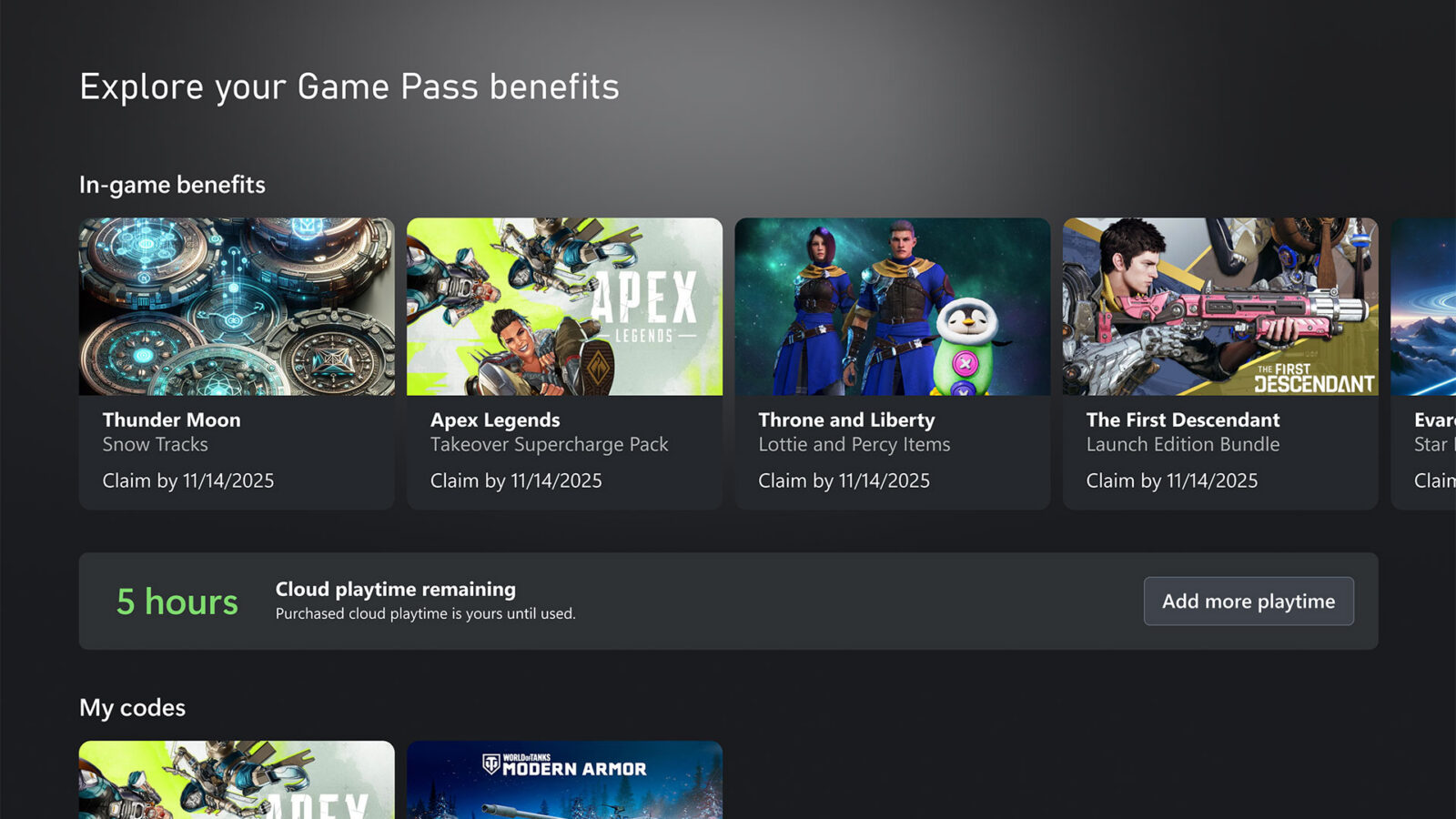
Xbox will introduce monthly cloud-gaming limits for Game Pass subscribers in November 2026. Ultimate members will receive 15 hours each month, Premium members 10 hours and Essential members 5 hours. Eligible subscribers can currently stream without those monthly caps, so this is a direct reduction for anyone who treats cloud play as a regular way to access games.
The limit affects a small group, but changes the value of every plan
Microsoft estimates the change will affect 4% of Game Pass subscribers. That percentage can still matter to the people most likely to depend on streaming: players using phones, handhelds, smart TVs or an Xbox One to reach games built for Xbox Series X|S. The allowance also works out differently by habit. Fifteen hours can cover a few short sessions; it is less than four hours a week across an average month.
Once the included time is used, subscribers will be able to buy additional cloud-play hours through the Xbox Store. Microsoft says options and features may vary by market and plans to disclose pricing, eligible games and the way remaining time is displayed in November. Until those prices exist, it is impossible to calculate the full monthly cost for a player who regularly exceeds the allowance.
Cloud play will also be sold without Game Pass
The same change creates a second route into Xbox Cloud Gaming. Players will be able to purchase hours without a recurring Game Pass subscription and stream supported games they already own on compatible devices. That could be useful for occasional travel or for testing cloud access before paying for a monthly plan, but the value depends entirely on the unannounced hourly price and supported-game list.
Microsoft attributes the limits to the rising cost of providing cloud capacity as usage and session length grow. The company also acknowledges that some players will pay more in practice. The unanswered price is therefore not a minor footnote: it will determine whether November introduces a flexible metered option or turns a previously unlimited plan benefit into a recurring surcharge.